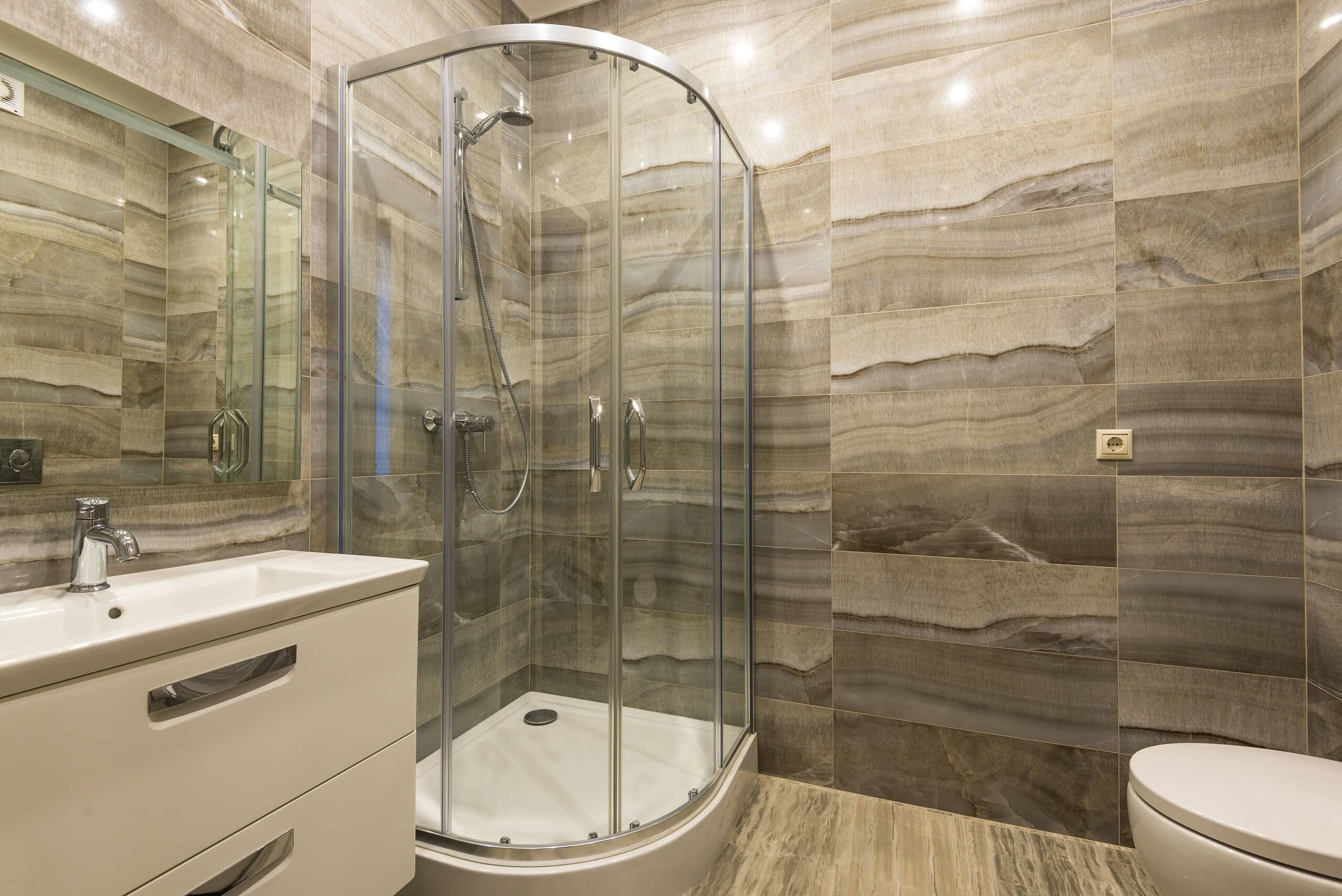
A shower remodel is one of those projects that homeowners put off for years — and then wonder why they waited so long once it’s done. The shower is the most used fixture in the bathroom, the first thing buyers scrutinize during a showing, and the space that sets the tone for the entire room. When it’s dated, cramped, or just tired-looking, it quietly affects how you feel about the whole house.
The good news is that a shower remodel doesn’t require gutting the entire bathroom to deliver a dramatic result. Targeted, well-executed work on the shower space — new tile, a frameless enclosure, a curbless entry, a rainfall fixture — transforms the room completely and delivers returns that extend well beyond aesthetics.
Here are five reasons Staten Island homeowners are prioritizing the shower remodel over any other bathroom project right now.
Reason 1: It’s the Single Highest-Impact Update in the Entire Bathroom
The shower area accounts for roughly 70% of the visual impact of any bathroom renovation. It’s where the eye goes first, where photography is centered in listing shots, and where buyers form their strongest impression of the room. No other single change — not a new vanity, not updated lighting, not fresh tile on the floor — carries the same visual weight.
This is why a targeted shower remodel consistently outperforms full bathroom overhauls on a per-dollar basis. A bathroom gut renovation that changes everything returns an average of 50% to 60% of its cost nationally. A mid-range shower remodel — new tile surround, frameless glass enclosure, updated fixtures, and a built-in niche — typically runs $6,000 to $14,000 and recovers 60% to 70% of that cost in added resale value, while also transforming how the bathroom reads to anyone who walks in.
The upgrade that delivers the most impact for the least disruption is almost always the shower. Starting there and leaving the rest of the bathroom intact — or making targeted complementary updates — is the approach that produces the strongest return.
Our bathroom remodeling team focuses on exactly this scope: high-impact shower work that elevates the entire room without the cost and disruption of a full gut renovation.
Reason 2: A Shower Remodel Adds Measurable, Documented Resale Value
Walk-in showers are among the most consistently requested features in the current buyer market, and homes that have them command meaningfully stronger interest than those with dated tub-shower combinations. According to Remodeling Magazine’s Cost vs. Value data, walk-in shower installations return 60% to 70% of their cost at resale — one of the strongest returns in bathroom renovation.
Beyond the percentage return, the practical impact on a sale is even more significant. A dated or failing shower leads buyers to estimate repair costs, negotiate aggressively on price, or request seller credits at closing. A recently remodeled shower removes all of those friction points. Buyers see a move-in ready bathroom, the inspection produces no actionable findings in that area, and the negotiation starts from a stronger position.
Upgrading a home’s shower space can increase overall home value by 5% to 10% depending on the scope of the project and the local market. On a Staten Island home valued at $600,000, that’s $30,000 to $60,000 in added value from a project that may cost $8,000 to $15,000 to complete. The math is straightforward and the payoff begins the moment the project is finished.
Reason 3: The Current Shower Remodel Is Built Around How People Actually Use the Space
Shower design has changed significantly over the past decade, and the gap between a shower built in 2005 and one designed in 2025 is larger than most homeowners realize. The shifts aren’t just aesthetic — they’re functional, and they reflect how people actually want to use the space every day.
Curbless, barrier-free shower entries have moved from a niche accessibility feature to the dominant design choice in primary bathroom renovations. The absence of a step-over threshold makes entry effortless, eliminates a cleaning headache, and creates a visual continuity between the shower floor and the bathroom floor that makes the entire room feel larger. According to the 2025 Houzz Bathroom Trends report, curbless and low-curb shower entries are among the most requested features in bathroom renovation projects nationally.
Rainfall showerheads — ceiling-mounted, large-format, designed to simulate the experience of standing in natural rainfall — have replaced single-spray heads as the standard expectation in remodeled showers. Paired with an adjustable body jet or handheld wand, the combination creates a shower experience that is genuinely different from what most homeowners currently have.
Built-in niches — recessed shelves tiled to match the surround — replace wire caddies and shampoo bottles stacked on the floor. Large-format tile with minimal grout lines replaces the dated 4×4 ceramic squares that characterize most builder-grade showers installed before 2010.
None of these features are extravagant. They’re the standard expectation in a remodeled shower today, and they’re what buyers compare your bathroom to when they’ve toured three other properties that afternoon.
Reason 4: A Shower Remodel Solves Real Problems That Only Get Worse
A lot of homeowners who delay a shower remodel are doing so because the existing shower is functional — water comes out of the showerhead, the door closes, nobody is complaining. What they don’t see is what’s happening behind the tile.
Grout cracks and deteriorates over time, and once it goes, water penetrates the substrate below the tile. Depending on what was used as a waterproofing membrane behind the tile — and in older construction, sometimes nothing substantial was — that water can saturate the cement board, reach the wall framing, and create conditions for mold growth and wood rot that aren’t visible until a renovation opens the wall.
Caulk joints at the floor-wall transition and around any penetrations degrade similarly. The flexibility that new caulk provides — accommodating the slight movement that happens in a wet, temperature-cycling environment — disappears as the material ages and cracks. Once those joints fail, water has a direct path through the substrate.
The practical reality is that a shower surround in poor condition doesn’t stay in its current condition. It gets worse. The longer a deteriorating shower remodel is deferred, the more likely that opening the walls reveals damage that adds cost and scope to the project. A shower that can be retiled for $4,000 today may require substrate replacement and mold remediation before the tile work can begin if it’s left for another three years.
Our tile and stone team handles full shower surround removal and replacement, including assessment of the substrate condition before any new materials are installed. It’s the part of the work that determines how long the finished shower remodel actually lasts.
Reason 5: The Daily Experience of Your Home Improves Immediately
Four of the five reasons on this list are about resale value, function, and financial return. This one is simpler: a well-executed shower remodel changes how you feel about your home every single morning.
The shower is where most people start their day. It’s the first room they use, the space where the transition from sleep to function happens. A shower that’s cramped, mold-stained, visually dated, or simply mediocre to stand in affects that experience in ways that are easy to dismiss until they’re no longer a factor.
A curbless walk-in shower with large-format tile, a rainfall head, and a frameless glass enclosure that keeps the room feeling open isn’t a luxury indulgence — it’s a functional upgrade to a space you use every day. The payoff is immediate and ongoing, and it doesn’t require selling the house to realize it.
This is the reason homeowners who do a shower remodel consistently describe it as one of the best renovation decisions they made — not because of the ROI calculation, but because of the daily use. The financial case is compelling on its own. The lived experience makes it an easy decision.
What a Shower Remodel Costs in Staten Island
A mid-range shower remodel — new tile surround, curbless entry, frameless glass enclosure, rainfall showerhead, and built-in niche — typically runs $7,000 to $15,000 installed for a standard primary bathroom shower in Staten Island. The range depends on tile selection, glass specifications, and whether any substrate or plumbing work is required.
A more comprehensive upgrade that includes converting a tub-shower combination to a dedicated walk-in shower, with custom tile work and a high-end fixture package, generally runs $12,000 to $25,000 depending on the size of the finished shower and the materials chosen.
Either scope is achievable within a full bathroom remodeling project or as a standalone shower remodel with targeted complementary updates. The decision on scope depends on the condition of the rest of the bathroom and how much of the visual return you want to capture in a single project.
At Albatros Construction, we handle the complete scope of shower remodel work — from tile selection and waterproofing through glass installation, fixture connection, and finish work. If you’re ready to move forward or want to understand what the project involves for your specific bathroom, contact us for a free estimate.
You can also explore our tile and stone services, finish carpentry and millwork for built-in storage and custom niches, and our completed construction projects to see the quality of our finish work across Staten Island.
The shower remodel you’ve been putting off is the one you’ll be glad you did.
Albatros Construction Inc. is a licensed general contractor serving Staten Island, NY. We specialize in bathroom and kitchen remodeling, tile and stone work, residential renovations, and home additions.