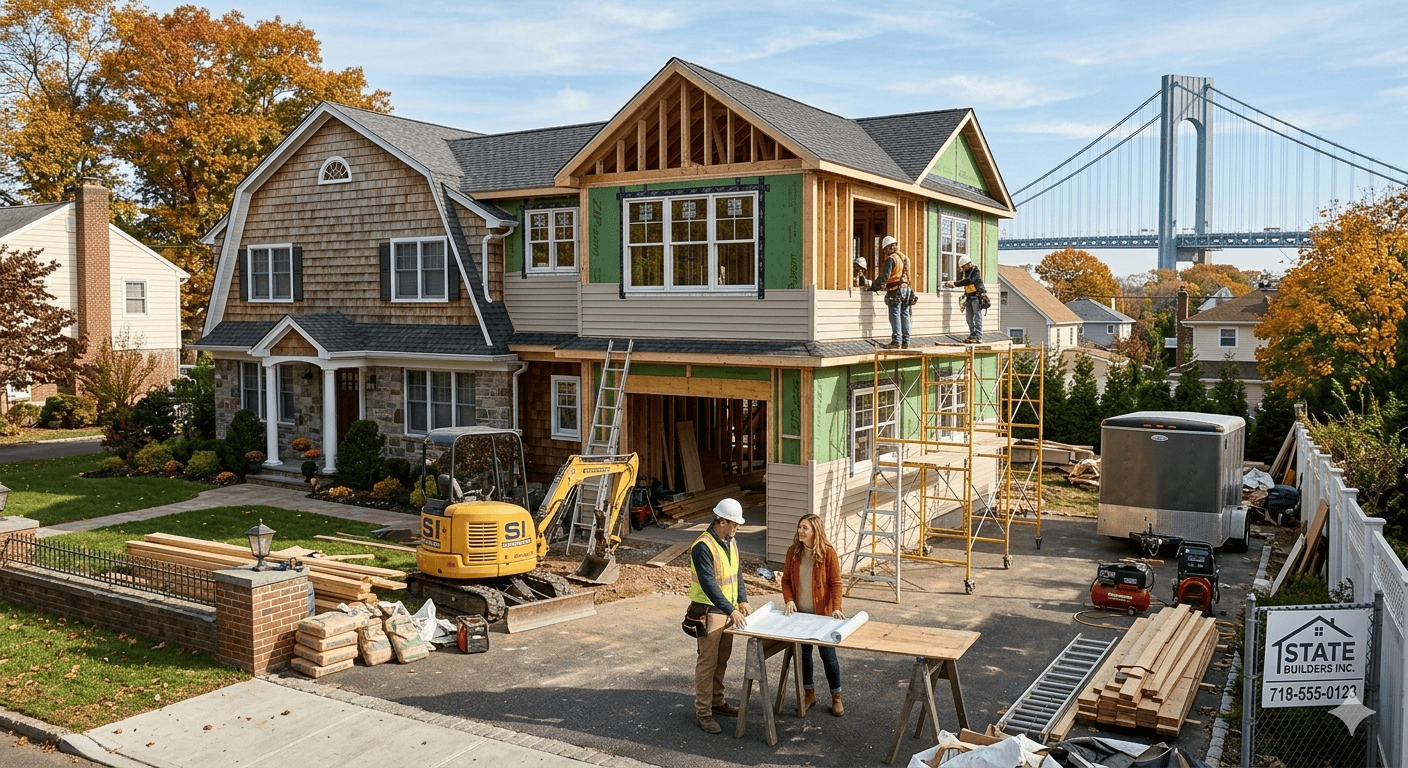
You’ve outgrown your space. Maybe the family has grown, you need a dedicated home office, or you simply want more room without the disruption of moving. A home addition is one of the most significant investments a Staten Island homeowner can make — and one of the most rewarding when done right.
But before the first nail goes in, there’s a lot to understand. Home additions involve permits, structural decisions, budget planning, and contractor selection. Getting these things right from the start determines whether your project goes smoothly or turns into a costly headache.
This guide covers what you actually need to know.
First: What Type of Addition Are You Building?
Not all additions are the same. Before you start getting quotes, it helps to understand what category your project falls into.
Horizontal additions extend your home outward — into the yard, along the side of the house, or toward the front. They typically require more land and involve new foundation work, but they’re structurally simpler than building upward.
Vertical additions add a floor on top of your existing structure. They’re ideal when you have limited yard space — which is common on Staten Island — but they require a structural assessment of your existing foundation and walls to ensure they can carry the additional load.
Bump-outs are smaller extensions — typically one room — that push out from an existing wall. They’re less complex than a full home addition and can be a cost-effective way to add a bathroom, expand a kitchen, or create a mudroom.
Garage conversions or above-garage additions transform underutilized space into livable square footage. Common uses include in-law suites, home offices, or additional bedrooms.
Knowing which type fits your goals and your property will help you have more productive conversations with contractors and architects from day one.
Permits: What You Need to Know in New York City
Staten Island falls under New York City’s Department of Buildings (DOB) jurisdiction, which means home additions require permits — and the permitting process here is more involved than in many other parts of the country.
For any structural home addition, you will need:
- Architectural plans stamped by a licensed architect or engineer
- A building permit application submitted to the DOB
- Inspections at various stages of construction
- A Certificate of Occupancy (or amended CO) upon completion
The timeline for permit approval varies depending on the complexity of the project and the current DOB workload. Simple additions projects might be approved in a few weeks; more complex projects can take months. This needs to be factored into your overall project timeline.
A reputable contractor will be familiar with the NYC building permit process and will either handle it directly or work with your architect to manage it. If a contractor suggests skipping permits to save time or money, walk away. Unpermitted home additions create serious problems when you sell the property and can result in mandatory demolition orders.
Budget: What Additions Actually Cost in Staten Island
Home additions are a significant investment. The range is wide depending on scope, materials, and finishes, but here are realistic ballpark figures for Staten Island:
A basic room addition — a bedroom or home office with standard finishes — typically runs between $150 and $250 per square foot. A 300 square foot addition would therefore range from roughly $45,000 to $75,000, not including furniture or custom finishes.
Bathroom additions cost more per square foot due to plumbing and tiling — expect $800 to $1,500 per square foot depending on fixtures and layout complexity.
Second-story additions are more expensive than ground-floor expansions due to the structural work involved — typically $300 to $500 per square foot.
Kitchen expansions vary widely based on whether cabinetry, appliances, and countertops are being replaced as part of the project.
These are estimates. The only way to get an accurate number is a detailed on-site assessment with a contractor who can evaluate your specific structure, your goals, and current material costs.
One important note: always budget a contingency of 10 to 15 percent above your quoted price. Additions often reveal unexpected conditions — old plumbing that needs updating, insulation that doesn’t meet current code, structural elements that need reinforcement. Having contingency funds prevents these surprises from derailing the project.
Will It Add Value to Your Home?
The honest answer: it depends on the addition.
In Staten Island’s real estate market, additions that add bedrooms, bathrooms, or functional living space generally return strong value. Adding a bedroom can meaningfully increase your home’s sale price and make it competitive in a different buyer category. Adding a bathroom to a home with only one is almost always a smart investment.
Purely cosmetic or highly personalized additions — a sunroom in an unusual style, a highly specific home theater setup — may not return their full cost in resale value, even if they dramatically improve your quality of life while you’re living there.
The best additions are those that fill a real need in both your lifestyle and the broader market. A contractor who knows the Staten Island market can help you think through which additions make the most financial sense for your specific home.
Choosing the Right Contractor
This is where projects succeed or fail.
An addition is not a small job. It involves foundation work, framing, roofing, electrical, plumbing, insulation, drywall, and finishing — often coordinated across multiple trades. The contractor you choose needs to have direct experience with this type of project, not just general renovation experience.
When evaluating contractors, ask for:
Proof of license and insurance. In New York, contractors performing structural work must be licensed. Never work with an unlicensed contractor without building permit on an home addition.
References from addition projects specifically. A contractor who has successfully completed additions in Staten Island will be able to point you to completed work and satisfied clients.
A detailed written estimate. Vague quotes lead to disputes. A professional contractor will provide a scope of work, line-item costs, a timeline, and payment terms in writing before any work begins.
Clear communication. You’re going to be working with this person for weeks or months. How they communicate in the sales process tells you a lot about how they’ll communicate during construction.
How Long Will It Take?
A typical room addition takes 6 to 12 weeks of active construction, not counting the permitting process. More complex additions — second stories, additions with significant plumbing or electrical work — can take 3 to 6 months from breaking ground to final inspection.
The permitting phase before construction begins adds additional time. From the moment you sign a contract to the moment your addition is complete and certified, you should realistically plan for a total timeline of 4 to 8 months for most projects.
Plan accordingly. If you’re building an in-law suite for a family member arriving in the spring, start the process in the fall.
Common Mistakes to Avoid
Choosing the lowest bid. The cheapest quote almost never produces the best outcome on a project this complex. Evaluate quality, experience, and communication — not just price.
Underestimating the disruption. An addition is a significant construction project happening in or connected to your home. Dust, noise, restricted access to parts of the house — plan for this and discuss it with your contractor before work begins.
Skipping the architect. For anything structural, an architect’s plans aren’t just a permit requirement — they’re a roadmap that prevents costly mistakes during construction.
Not thinking about the long term. An addition should integrate seamlessly with your existing home, both structurally and aesthetically. Make sure your contractor understands that goal from the start.
Ready to Start Planning?
Albatros Construction has completed residential additions across Staten Island, from single-room bump-outs to full second-story builds. We handle the complete process — from initial design consultation and building permit to construction and final inspection.
Call us at +1 718-688-1919 or reach out online to schedule your free estimate.