The weeks between the end of summer and the first serious autumn rain are the most valuable window of the year for identifying chimney and flashing problems before they become water damage claims. A chimney and flashing inspection conducted in August or September gives homeowners the time to address what’s found before the weather that will exploit those vulnerabilities arrives — and before the fall rush fills contractor schedules with homeowners who waited too long.
Most chimney and flashing failures don’t announce themselves dramatically. A roof that leaks during a major storm is obvious. A chimney that allows water to infiltrate through a cracked crown or a millimeter-wide gap in the flashing sealant does it slowly and invisibly — staining ceiling plaster, rotting roof deck timbers, growing mold in wall cavities — for months before the homeowner has any visible evidence that something is wrong. By the time it’s visible, the water damage is already significant and the repair scope has expanded well beyond what fixing the original flashing gap would have cost.
The National Fire Protection Association recommends annual chimney inspections for all homeowners regardless of fireplace use frequency. The right time for that inspection on Staten Island is now — before the chimney is needed for winter heating and before the fall rush makes scheduling a professional assessment a multi-week wait.
Here are the five specific checks that determine whether a chimney and flashing system will hold through a New York winter or fail it.
Check 1: The Chimney Crown
The chimney crown is the concrete or mortar cap that covers the top of the chimney, surrounding the flue liner and sloping outward over the edges of the chimney to direct water away from the masonry below. It is the chimney’s primary defense against direct water entry at the most exposed point of the structure — and it is one of the most commonly failed components on Staten Island’s older chimneys.
Chimney crowns crack for the same reason all exposed concrete cracks on New York rooftops: thermal expansion and contraction cycling through the extremes of summer heat and winter cold, combined with the freeze-thaw cycling that occurs dozens of times through a Staten Island winter. Each cycle opens existing micro-cracks slightly wider. Water that enters a cracked crown in autumn freezes in the crack in winter, expands, and forces the crack wider. By spring, what was a hairline crack is a gap wide enough to allow rain to flow directly into the chimney’s interior.
From the ground with binoculars, a cracked chimney crown often shows as a visible line across the concrete surface or as weathered, discolored material at the crown perimeter where cracks have been wicking moisture for more than one season. Once a crown crack is confirmed, the repair options range from a flexible crown sealant coating applied to minor surface cracking to full crown replacement for crowns that have deteriorated beyond surface repair.
The standard recommendation for any chimney crown with visible cracking on a home that relies on the chimney for winter heating is to address it before the first hard freeze — both because the water intrusion risk is real and because freeze-thaw cycling through an unrepaired crack makes the subsequent repair scope larger and more expensive every winter it’s left unaddressed.
Check 2: Step Flashing and Counter Flashing
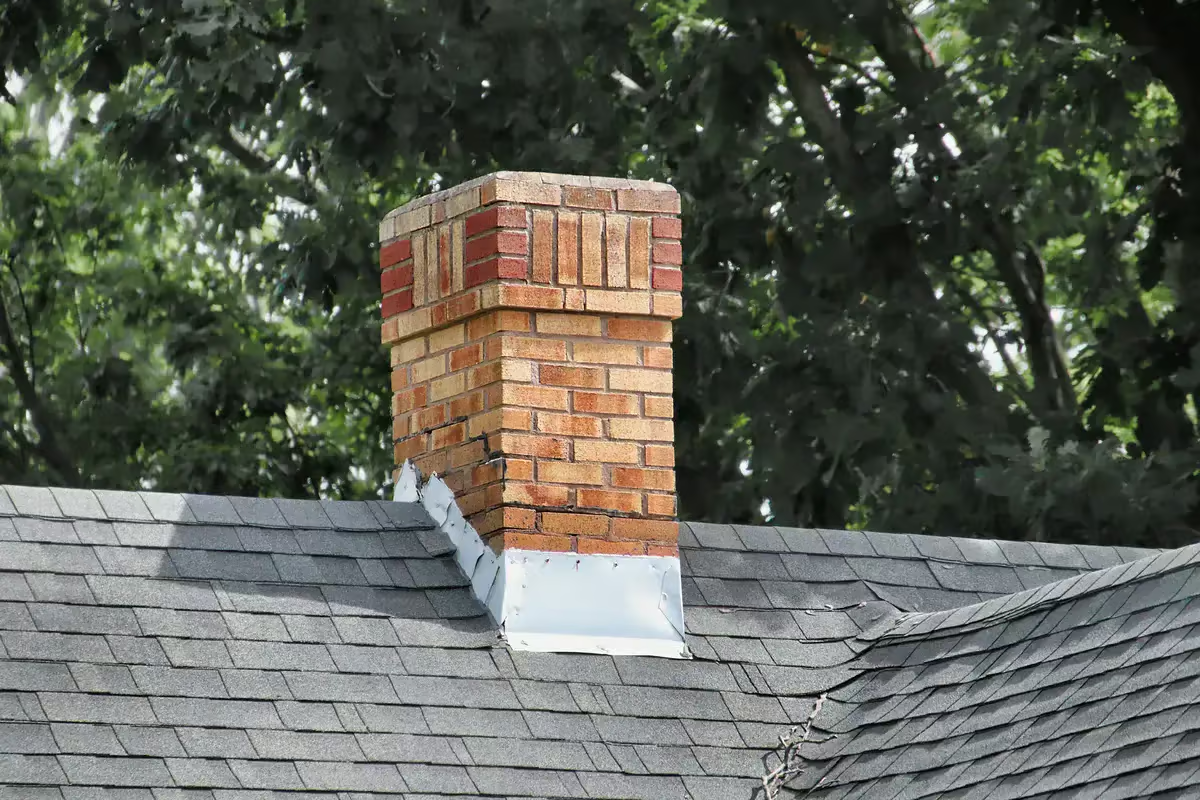
Flashing at the chimney-to-roof intersection is a two-layer system: step flashing, which is woven into the shingles along the sides of the chimney in an alternating pattern as each course of shingles is installed; and counter flashing, which is embedded into the chimney masonry above the step flashing and laps down over it to create a waterproof overlap that accommodates the differential thermal movement between the masonry chimney and the surrounding roof structure.
This two-layer system is what Albatros Construction’s chimney team describes as a multi-layer flashing system — and the reason for the redundancy is that each component alone is insufficient. Step flashing embedded in shingles holds water out from below but needs counter flashing above it to prevent water from running down the face of the chimney and behind the step flashing from above. Counter flashing embedded in the masonry provides that protection but needs the step flashing beneath to capture water running off the roof surface.
The failure modes that most commonly appear on Staten Island chimneys are:
Counter flashing that has been improperly installed — surface-applied with sealant rather than embedded into a mortar joint cut — pulling away from the masonry face as sealant ages and loses its adhesion. This is particularly common on chimneys that have had previous repair work done by non-specialists who used caulk as a substitute for proper embedded flashing installation.
Step flashing that was installed without the correct overlap between adjacent pieces, or that has lifted from the roof surface as the surrounding shingles have aged and shifted, creating open gaps at the vertical face of the chimney where water can enter between the flashing and the shingle.
Rust and corrosion on galvanized steel flashing that has reached the end of its service life — typically 15 to 25 years for galvanized steel, compared to 50 or more years for copper — and is now beginning to fail at seams and corners.
A professional chimney and flashing inspection assesses the condition of both layers and identifies which failures can be addressed with targeted sealant or re-embedment work and which require full flashing replacement.
Check 3: The Chimney Cap
A chimney cap is the metal cover that sits directly over the flue opening at the top of the chimney — above the crown, covering the flue tile opening — and prevents rain, snow, birds, animals, and debris from entering the flue directly.
A missing or damaged chimney cap is one of the most straightforward sources of water entry into a chimney, because it eliminates the primary mechanical barrier between the open flue and direct precipitation. Rain that falls into an uncapped flue runs down the flue liner, accumulates on the damper plate or firebox floor, and wicks into surrounding masonry. Over multiple rain events, this direct water exposure deteriorates the interior masonry and the flue liner, accelerates rust on the damper, and saturates the firebox surround in ways that produce staining and eventually structural damage.
Beyond water, an uncapped flue is an entry point for nesting birds — particularly chimney swifts, which are a protected species under the Migratory Bird Treaty Act and cannot be removed once nesting is underway — as well as raccoons, squirrels, and other animals whose presence in a flue creates both blockage risk and health hazards from animal waste.
The chimney cap check from the ground involves confirming that a cap is present, visually intact, and correctly seated over the flue opening. Caps that appear tilted, have visible corrosion damage at the mounting brackets, or are missing sections of their mesh sides need to be addressed before the first autumn rain event.
Our chimney construction and repair service includes chimney cap inspection and replacement as part of any chimney assessment.
Check 4: Mortar Joint Condition
The mortar joints between the brick courses of a chimney are, like the mortar joints on any exterior masonry, subject to progressive deterioration through the freeze-thaw cycles that are an inherent feature of New York winters. Open or deteriorated mortar joints allow water infiltration into the masonry, which then freezes, expands, and fractures the surrounding brick faces — a process called spalling — that converts a repointing job into a more extensive masonry repair.
Chimney mortar deteriorates faster than wall mortar for two reasons: elevation and exposure. Chimneys project above the roof plane, exposing all four faces to wind, rain, and UV radiation from multiple angles rather than the single-exposure that a flat wall receives. And the heat cycling from an active fireplace — repeated high-temperature periods followed by cooling — adds thermal stress to the exterior mortar that wall masonry doesn’t experience.
From the ground with binoculars, deteriorated chimney mortar appears as recessed, crumbling, or absent material in the joints between brick courses. Open joints wide enough to insert a finger — or visible from ground-level distances — represent conditions where water infiltration is already occurring and where the approaching winter will cause measurable additional damage.
Repointing — the process of removing deteriorated mortar and replacing it with fresh material — is the appropriate response to joints in this condition. For a chimney, repointing typically runs $500 to $1,500 depending on the height of the chimney, the extent of deterioration, and access conditions. A chimney whose repointing is deferred through another winter of freeze-thaw cycling may require partial or full rebuilding of deteriorated sections in addition to repointing — at a significantly higher cost.
Our brick and blockwork team handles chimney repointing and masonry repair as part of our broader exterior masonry services for Staten Island homeowners.
Check 5: The Attic Inspection — Confirming What the Exterior Reveals
The fifth check in a pre-autumn chimney and flashing inspection doesn’t happen on the roof at all. It happens in the attic.
The attic provides confirmation of the actual condition of the chimney and flashing system independent of what can be seen from the exterior. Staining on the roof deck timbers surrounding the chimney penetration, wet or discolored insulation adjacent to the chimney chase, visible daylight through the roof deck near the chimney, or active moisture on the masonry below the roofline — any of these confirm that water has been finding its way in through a pathway that the exterior inspection may or may not have clearly identified.
The attic inspection is particularly important on older Staten Island homes where previous flashing repairs may have been cosmetic — caulk applied over existing gaps, for example, that created a temporary seal that has since failed — leaving the exterior looking acceptable while the underlying failure continues to direct water into the attic structure. A professional who inspects only the exterior of a chimney and flashing system is seeing only half the picture.
Water damage in the attic at the chimney penetration point is not a self-correcting condition. It gets worse with each rain event and dramatically worse with each winter. Identifying it in August and addressing the exterior cause while there is still time to complete the repair before winter is the intervention that prevents a targeted repair from becoming a structural remediation project.
Why Pre-Autumn Timing Matters More Than Homeowners Realize
The case for completing a chimney and flashing inspection in August or September rather than October or November is not just about getting ahead of the cold weather. It is about contractor availability.
Fall is the busiest period of the year for roofing and chimney contractors in the New York metro area. Every homeowner who deferred summer maintenance until the weather turned cooler, every homeowner who discovered a leak during the first autumn rain, and every homeowner who is preparing their fireplace for the first cold night — all of them are calling contractors at the same time. The result is backlogs that push work into November and December, when roofing and masonry work is limited by temperature requirements, and some work that simply doesn’t get done before winter.
An August chimney and flashing inspection books before that backlog forms. It gives the homeowner time to review findings, understand the repair scope, and schedule work for a September or October completion — when the weather is still fully cooperative and the contractor’s calendar has not yet filled with emergency calls from the homeowners who waited.
The repair costs for chimney and flashing problems caught in September are the same as or lower than the same repairs done in November under time pressure. The water damage costs from the same problems going unrepaired through a New York winter are many multiples of the repair cost — because the water doesn’t wait for a convenient scheduling window.
What Albatros Construction Does About It
Albatros Construction provides professional chimney and flashing inspection, repair, and replacement for Staten Island homeowners preparing for winter. Our chimney construction and repair services cover the full range of chimney system conditions — from crown repair and chimney cap replacement to full flashing system replacement, repointing, and structural chimney rebuilding when needed.
We conduct both exterior and attic inspections as part of any chimney assessment, ensuring that the findings from both perspectives inform the repair scope rather than addressing only the visually obvious exterior condition.
For homeowners whose inspection identifies roofing issues alongside chimney and flashing concerns, our roofing installation and replacement team coordinates both scopes in a single project — avoiding the cost and disruption of separate mobilizations for adjacent work.
Contact us for a free estimate and we’ll schedule your pre-autumn chimney and flashing inspection before the fall calendar fills. The inspection takes a few hours. The water damage it prevents can take months and tens of thousands of dollars to remediate.
You can also explore our exterior structural services and brick and blockwork services for the full range of masonry and exterior work we handle across Staten Island, and browse our completed projects to see the quality of chimney and exterior work we deliver.
Albatros Construction Inc. is a licensed general contractor serving Staten Island, NY. We specialize in chimney construction and repair, roofing, masonry, exterior structural work, and residential renovation.