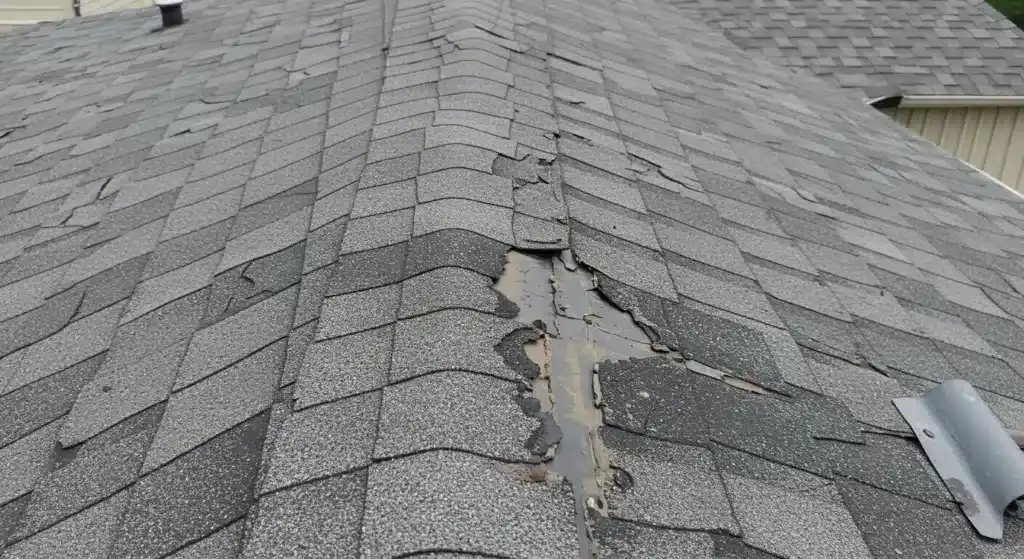
Roof heat damage is one of the most misunderstood threats to a home’s structural integrity — not because it is rare, but because most of it is invisible. A severe storm leaves obvious evidence: missing shingles, broken branches on the roof, water stains on the ceiling within days of the event. A sustained August heat wave leaves a different kind of damage — slower, quieter, and far more likely to be ignored until it compounds into something genuinely expensive.
On Staten Island, where July and August routinely deliver sustained heat with high humidity and intense sun exposure across multiple consecutive days, the thermal stress on residential roofing systems is significant. A dark asphalt shingle roof on a south-facing pitch can reach surface temperatures of 150°F to 190°F during peak afternoon heat. At those temperatures, the same materials designed to protect the home from rain, wind, and cold are undergoing accelerated degradation — and most homeowners have no idea it’s happening.
Here is what August heat actually does to a roof, what the warning signs look like, and what a Staten Island homeowner should do before the first autumn storm arrives on already-weakened material.
The Thermal Expansion Cycle: Damage That Compounds Daily
The most fundamental mechanism of roof heat damage is thermal expansion and contraction — a cycle that repeats every single day throughout the summer months and whose cumulative effect is far more destructive than any single extreme event.
As the roof surface heats up through the morning and peaks in the early afternoon, roofing materials expand. The asphalt in shingles softens slightly. Fasteners expand inside their penetrations. Flashing metal expands at joints and seams. As temperatures drop through the evening and overnight — a swing that can reach 60°F to 90°F between the peak afternoon high and the early morning low — the same materials contract. This daily expansion-contraction cycle applies stress at every connection point, seam, and fastener in the roofing system.
Over a single summer, this cycle repeats dozens of times. Over several summers without inspection or maintenance, the cumulative effect is measurable: fasteners that were properly seated gradually loosen in their holes, flashing that was firmly sealed against the chimney or wall gradually pulls away at the edges, ridge cap shingles that were tightly bonded gradually develop micro-gaps at their seams. None of these changes are catastrophically visible from the ground. All of them represent open pathways for water infiltration when the first heavy autumn rain arrives.
The areas of a roof most affected by thermal stress are the transition points where different materials meet: roof-to-wall flashing, chimney flashing, skylight perimeters, pipe boots, and valley intersections where two roof pitches meet. These are exactly the locations that concentrate stress from the differential expansion of adjacent materials, and they are exactly the locations where the majority of roof leaks originate.
Granule Loss: The Shingle’s Protective Layer Is Disappearing
Asphalt shingles are manufactured with a surface layer of mineral granules — small, sand-like particles embedded into the asphalt that serve as the shingle’s primary defense against UV radiation, impact, and water infiltration. The granules block UV rays from reaching the asphalt below, reflect a portion of solar heat, add fire resistance, and provide the surface texture that helps water shed efficiently down the slope.
Sustained heat and UV exposure gradually loosen these granules from their bonded position in the asphalt surface. On an older roof — one that has already experienced several years of summer heat cycles — the asphalt beneath the granules has dried out and lost flexibility, which accelerates the detachment process. Granules that were firmly embedded in a fresh shingle become progressively less secure as the asphalt ages and becomes more brittle.
The practical indicator of granule loss that homeowners can check without getting on the roof is the gutter. After a period of sustained summer heat — or after a rain event during a heat wave — a significant quantity of granules in the gutters is an indication that the shingle surface is degrading. A small amount of granule shedding is normal on newer roofs and unremarkable. Heavy, concentrated granule accumulation in gutters, particularly if unevenly distributed from specific sections of the roof, signals that those shingles are losing their protective capacity.
Once granules are lost, the exposed asphalt darkens rapidly, absorbs more heat, dries out faster, and becomes susceptible to the cracking and curling that follow. Granule loss is not the end of the problem — it is the beginning of an accelerating sequence of roof heat damage that ends in water infiltration.
Shingle Blistering and Curling: The Surface Signs of Internal Stress
Two of the most visible signs of roof heat damage — though still easily missed from ground level — are shingle blistering and shingle curling. Both indicate that the shingles have been pushed beyond the thermal tolerances they were designed to handle.
Blistering occurs when volatile compounds trapped inside the asphalt layer of the shingle are heated past the point where they vaporize, forming bubbles beneath the shingle surface. These bubbles push outward against the granule layer, weakening the bond between the granules and the asphalt, and when they eventually rupture — either under UV exposure or under the mechanical force of a rain event — they leave circular bare spots on the shingle surface where the granule layer has been disrupted.
Blistering is most common on roofs with inadequate attic ventilation, because the heat trapped in the attic bakes the shingles from below at the same time the sun is heating them from above. The combination of bidirectional heat exposure accelerates the process dramatically compared to what occurs on a properly ventilated roof.
Curling takes two forms: cupping, where the edges of the shingle curl upward, and clawing, where the middle of the shingle lifts away from the roof while the edges remain adhered. Both are products of the differential drying and shrinkage that occurs as the shingle loses moisture and flexibility over successive heat cycles. Curled shingles cannot lay flat against the roof deck, cannot shed water effectively, and are significantly more vulnerable to uplift damage from wind — which is exactly what the first nor’easter of autumn will deliver.
Flashing Failure: Where the Water Gets In
Flashing — the thin metal strips that seal the transitions between the roof surface and vertical elements like chimneys, dormers, skylights, and walls — is the most thermally active component of any roofing system. Metal flashing expands and contracts at a different rate than the surrounding asphalt shingles and underlying roof deck, and the sealant that maintains a waterproof bond between the flashing and adjacent surfaces is specifically vulnerable to heat degradation.
During a sustained August heat wave, the flashing around a typical Staten Island chimney undergoes thermal movement that stretches and compresses the sealant at the flashing edges repeatedly across successive hot days. Sealant that was flexible and fully adhered in the spring becomes progressively more brittle and begins to pull away from the masonry or the shingle surface at the edges. Gaps that are invisible during dry summer conditions become active leak points the first time water pressure builds up against the flashing base.
Chimney flashing is the highest-risk location because chimneys are the most thermally exposed element on the roof — projecting above the roof plane, exposed to direct sun on multiple faces, and subject to the greatest temperature swings between face and shade. A chimney that has had the same flashing installation for ten or more years without inspection or maintenance has almost certainly developed at least minor sealant deterioration, and a summer of sustained heat accelerates that process significantly.
Our Staten Island chimney construction and repair service includes flashing assessment and replacement as part of any chimney inspection, which is particularly important for homeowners who haven’t had the roof-to-chimney transition professionally assessed in several years.
Attic Heat Buildup: The Damage That Happens From Below
The most consequential — and least visible — form of roof heat damage doesn’t happen on the surface at all. It happens in the attic.
A poorly ventilated attic on a Staten Island home can reach temperatures of 130°F to 160°F during a sustained heat wave. At those temperatures, the roof deck — the structural layer of plywood or OSB that the shingles are nailed to — is being baked from below while the shingles above are being baked by the sun. The result is accelerated aging of both the shingles and the structural substrate simultaneously.
The heat bakes the moisture out of the wood deck, causing it to dry, shrink, and develop cracks that compromise its structural integrity. Shingles fastened to a deck that has expanded and contracted repeatedly across multiple seasons experience stress at their fastener points that would not occur over a properly maintained and ventilated deck. And the adhesive strips that bond adjacent shingles together — the factory-applied sealant that keeps shingles from lifting in wind — loses its adhesion effectiveness much faster in a perpetually overheated attic environment.
Beyond the roofing system itself, attic heat buildup at these temperatures translates directly into higher cooling costs throughout the summer and the conditions for moisture accumulation if the ventilation imbalance allows warm air to stall rather than exhaust continuously. A properly functioning ventilation system — balanced intake at the soffit and exhaust at the ridge — keeps attic temperature close to outdoor ambient, which is the condition the roofing materials were designed to operate under.
Our roofing installation and replacement service always includes an attic ventilation assessment as part of any roofing project, because installing new shingles over a poorly ventilated attic simply repeats the cycle of accelerated thermal damage on a new surface. Our attic remodeling services address the insulation and ventilation systems that determine how the attic and the roofing above it perform through the full annual temperature range.
What to Look For From the Ground After a Heat Wave
A post-heat wave ground-level inspection is not a substitute for a professional roof assessment, but it gives homeowners specific things to look for that warrant a call to a contractor before the next heavy rain event.
Walk the perimeter of the house and look at the roof surface from multiple angles. Shingles that appear lifted at the edges, sections where the surface color looks inconsistent or darker in patches, or visible curvature in the shingle surface rather than a flat plane are all worth noting. Check the gutters — granule accumulation beyond what would be expected for normal weather, or concentrated deposits from specific roof sections, is a meaningful indicator of shingle surface degradation.
Look at the chimney flashing from the ground. Visible gaps between the flashing and the chimney masonry, or sealant that appears cracked and pulled away from the masonry surface, are indicators of heat-related flashing failure that needs to be addressed before autumn rain reaches the gap. Look at any dormer or wall-to-roof transitions for the same separation between flashing and surface.
Walk the interior of the house and look at the ceiling in the rooms directly below the roof — particularly in the top-floor bedrooms and the room below the chimney. Any staining, even historic staining that has dried, documents a water pathway that exists and will reactivate. Check the attic if it is safely accessible — insulation that is wet, compressed, or stained, or visible daylight through the roof deck, are both indicators of active problems.
Any of these observations warrants a professional inspection before the first significant autumn rain. The cost of inspection and repair is a fraction of the cost of water damage to the structure, insulation, and interior finishes once a compromised roofing system allows infiltration.
What Albatros Construction Does About It
Albatros Construction Inc. provides professional roofing inspection, repair, and full replacement for Staten Island homeowners experiencing the consequences of summer heat on their roofing systems. We identify the specific failure points that heat waves accelerate — shingle degradation, flashing separation, granule loss, ventilation deficiency — and provide a clear repair scope with documented findings before any work begins.
For homeowners with roofing systems approaching or past the end of their expected lifespan, our roof replacement service addresses the entire system — shingles, underlayment, flashing, and ventilation — with materials rated for the New York metro climate and installed to the standard that protects the investment for its full designed lifespan.
For homeowners with specific flashing, chimney, or masonry concerns identified after this summer’s heat, our exterior structural services and chimney repair team address those components specifically, without requiring a full roof replacement if the broader shingle condition doesn’t warrant it.
Contact us for a free estimate and we’ll assess exactly what the summer has done to your roof — before the first autumn storm makes the question urgent rather than precautionary.
Albatros Construction Inc. is a licensed general contractor serving Staten Island, NY. We specialize in roofing installation and replacement, chimney repair, exterior structural work, and residential renovation.