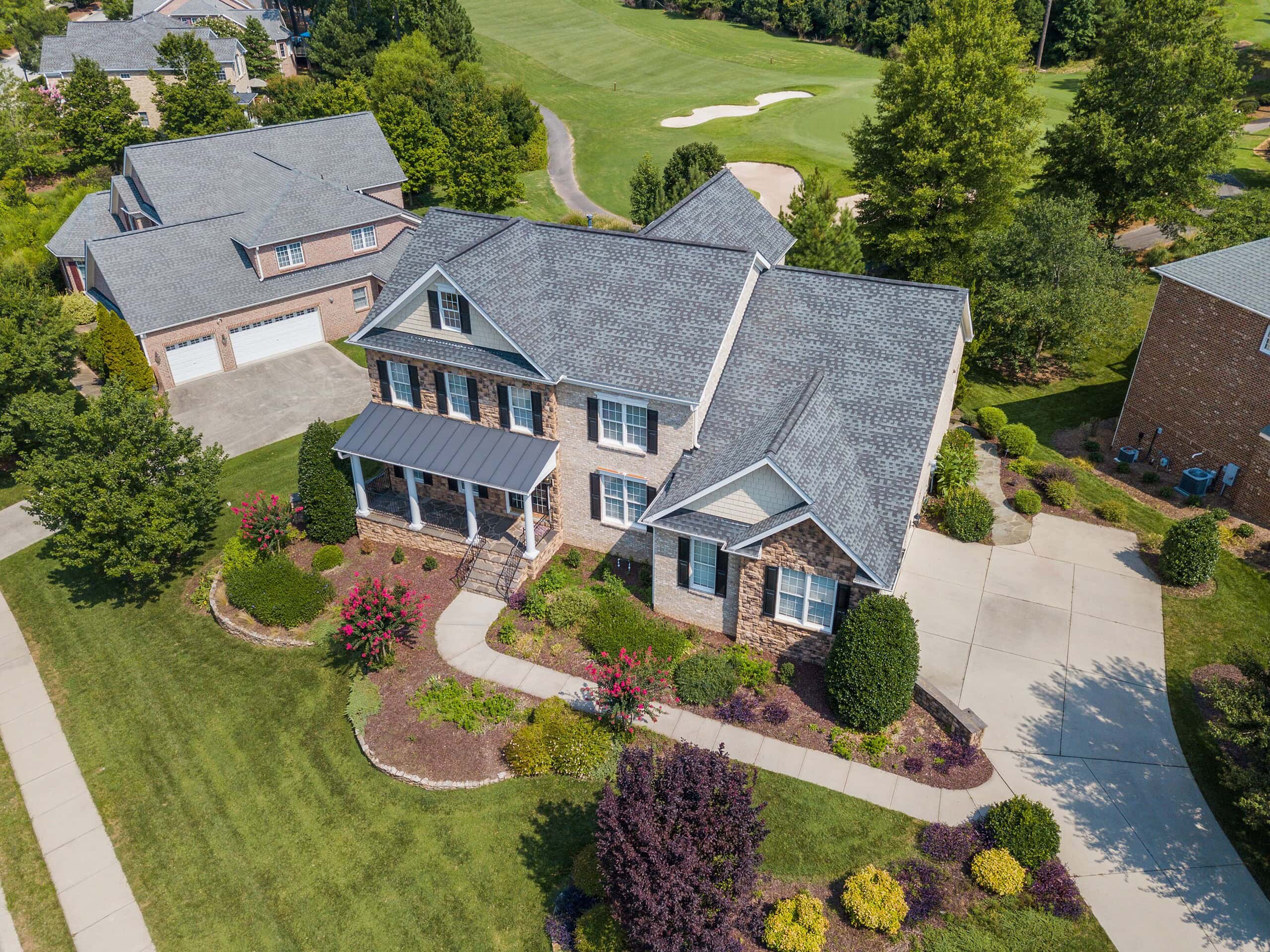
Roof color is one of the most overlooked decisions in a roofing project — and one of the most consequential. Most homeowners approach it the same way they’d choose an exterior paint shade: pick something that looks good against the siding and matches the neighborhood. That’s reasonable. But it ignores the fact that your roof color is doing thermal work every hour of every sunny day, and the difference between a dark shingle and a light one can mean a 50°F swing in surface temperature and a meaningful reduction — or increase — on every summer utility bill for the life of the roof.
On Staten Island, where summers run hot and humid from June through September and the housing stock leans heavily toward darker traditional shingles, this is a decision that’s worth making deliberately. Here’s what the science says, what it means in practical terms, and how to think about it when you’re planning a replacement.
The Physics Behind Roof Color and Heat
The relationship between roof color and heat is straightforward physics. Dark colors absorb solar radiation and convert it to heat. Light colors reflect solar radiation back into the atmosphere instead of absorbing it. On a roof, that difference plays out across the entire surface area of your home — typically 1,500 to 2,500 square feet for a standard Staten Island house — all day, every sunny day.
A dark roof — charcoal gray, dark brown, or black — can reach surface temperatures of 150°F or higher on a clear summer afternoon. That heat doesn’t stay on the surface. It conducts downward through the shingles and decking into the attic space, which can push attic air temperatures to 130°F or more. From there, it radiates through the ceiling into the living space, forces the air conditioning system to work harder to maintain the thermostat setting, and drives up the cooling load throughout the summer.
A lighter roof — light gray, tan, or white — reflects a significant portion of incoming solar energy before it can convert to heat. Studies from Lawrence Berkeley National Laboratory have demonstrated that light-colored roofs can run 50°F cooler than dark roofs under identical sun conditions. That 50°F difference at the surface translates directly into a cooler attic, less heat radiating into the living space, and reduced demand on the air conditioning system.
The U.S. Department of Energy has quantified the practical impact: buildings with light-colored or reflective roofs typically see cooling costs drop by 10% to 15% during hot months compared to equivalent homes with dark roofs. Over a 25-year roof lifespan, that adds up to meaningful cumulative savings — particularly in a market like New York where electricity costs are among the highest in the continental United States.
What Roof Color Means for Your Attic and Shingles
The effect of roof color doesn’t stop at your energy bill. It also directly influences how long your roofing materials last.
Heat is the enemy of asphalt shingles. The granules embedded in shingle surfaces protect the underlying asphalt from UV degradation — but when a dark roof reaches 150°F repeatedly across hundreds of summer days, the thermal stress accelerates that degradation regardless of granule coverage. The asphalt becomes brittle, shingles begin to curl at the edges, and the roof ages faster than its rated lifespan suggests it should.
A lighter roof color reduces that thermal stress by keeping surface temperatures lower. Less heat cycling means less expansion and contraction of the shingle material, which translates into a longer-performing roof. Lighter shingles also tend to perform better under the freeze-thaw cycles that New York winters deliver — the same thermal stress that accelerates aging in summer works differently in cold conditions, but the underlying principle is the same: extreme temperature swings cause more wear than moderate ones.
This is one reason roof color selection is worth discussing during a roof replacement rather than defaulting to whatever was there before. The previous color may have been chosen decades ago without any consideration of energy performance. Choosing differently now costs nothing extra and pays ongoing dividends for the life of the new roof.
The New York Climate Case: Neither Extreme Is Obvious
Staten Island sits in a climate zone that complicates the simple “go light for savings” advice. Unlike homes in Florida or the Southwest, where cooling dominates year-round and a light roof is almost always the right call, New York homes need to heat in winter as well as cool in summer.
A dark roof does absorb solar heat in winter, which provides a modest passive contribution to warming the home. A light roof reflects that winter sun away, which means your heating system does slightly more work to compensate. The question is whether the winter penalty offsets the summer savings.
The answer, consistently, is no — but the gap narrows in climates like New York’s compared to the Sun Belt. Research suggests that in four-season markets with hot summers and cold winters, a light roof still delivers net positive savings annually, because summer cooling loads are larger and more sustained than the modest winter solar gain a dark roof provides. The summer savings of a lighter roof typically run $100 to $300 per year for an average home, while the winter heating penalty of losing that dark-roof solar gain amounts to roughly $30 to $80 per year. The math favors lighter shingles even in New York.
That said, medium tones — light gray, weathered wood, slate — offer a practical middle ground that performs meaningfully better than dark colors while staying closer to the traditional aesthetic that fits most Staten Island neighborhoods. You don’t have to install a white roof to capture most of the energy benefit.
Cool Roof Technology: Dark Colors That Perform Like Light Ones
One of the most significant developments in roofing materials over the past decade is the emergence of cool roof shingles — dark-colored products that use specialized reflective pigments to reflect infrared radiation even while appearing dark to the eye.
Standard dark shingles absorb both visible light and the infrared spectrum that carries most of the sun’s heat. Cool roof shingles use pigments engineered to reflect the infrared portion of the solar spectrum, dramatically reducing heat absorption even in charcoal and dark brown shades. A dark cool-roof shingle can perform comparably to a medium-tone conventional shingle, giving homeowners who prefer the aesthetic of a dark roof a genuine energy-performance alternative.
The EPA’s Energy Star program certifies cool roofing products that meet minimum solar reflectance standards. For steep-slope residential roofs, Energy Star requires an initial solar reflectance of at least 0.25 — meaning the product reflects at least 25% of incoming solar energy. Products that carry this certification have been independently tested and verified, which takes the guesswork out of evaluating manufacturer claims.
When our roof replacement team discusses shingle options with homeowners who want a dark roof color, Energy Star-rated cool roof shingles are the recommendation that bridges aesthetics and performance. They’re available from all major manufacturers and typically carry no meaningful price premium over standard shingles in the same product line.
Roof Color Is Only One Part of the Thermal System
Roof color influences how much heat enters the attic. What happens to that heat once it’s there depends on two other systems: ventilation and insulation. All three work together, and optimizing one without addressing the others leaves performance on the table.
A well-ventilated attic removes heat that does enter through the roof deck before it has a chance to accumulate and radiate downward. Soffit vents bring cool outside air in at the eave; ridge vents exhaust warm air at the peak. When that airflow path is working correctly, even a moderately dark roof can be managed effectively because the heat doesn’t sit in the attic long enough to transfer into the living space. A poorly ventilated attic defeats even a light-colored roof — the heat reflects less effectively when it has nowhere to go once it penetrates.
Attic insulation is the thermal barrier between attic air and the living space below. The Department of Energy recommends R-38 to R-60 insulation values for attics in the New York climate zone. Below those levels, heat — regardless of how much the roof reflects — finds its way into the home. Older Staten Island houses frequently have insulation that falls well short of current recommendations, which means a roof replacement is an ideal opportunity to assess the full attic thermal system rather than just the shingles.
Our attic remodeling service addresses insulation and air sealing as part of a comprehensive attic upgrade, and we regularly coordinate this work alongside roofing projects to ensure the new roof and the attic system are optimized together rather than treated as separate scopes.
What to Consider When Choosing Your Roof Color
When you’re selecting a roof color as part of a replacement project, these are the factors worth weighing:
Energy priority vs. aesthetic preference. The lightest shades offer the best thermal performance. If energy savings are the primary driver, lean toward light gray, tan, or weathered wood tones. If aesthetics matter more and you want a darker look, specify Energy Star-rated cool roof shingles in that shade.
Neighborhood context. Some HOAs and historic districts have color restrictions. Even without formal rules, a roof that contrasts sharply with every surrounding home can affect resale perception. Medium neutral tones tend to be the most universally compatible.
Siding and trim color. Roof color interacts visually with the home’s exterior palette. Light roofs pair well with most siding colors. Very dark roofs can feel heavy against lighter exteriors but anchor homes with dark or deeply saturated siding effectively.
Current attic conditions. If ventilation is poor or insulation is thin, addressing those systems will deliver more temperature benefit than roof color alone. A roof replacement is the right moment to evaluate all three together.
Long-term cost. Over a 25-year roof lifespan, the cumulative energy savings of a lighter or cool-rated roof are real and compound year over year. On Staten Island, where electricity costs are high, that math is more favorable than it would be in a lower-cost energy market.
Making the Right Call for Your Home
Roof color affects your energy bills, your shingle lifespan, and the comfort of your home every summer — and the decision costs nothing extra to make well when you’re already doing a replacement. The only variable is information.
At Albatros Construction, we walk through all of it with homeowners during the planning phase of a roofing project: color options, material grades, Energy Star ratings, ventilation requirements, and how insulation interacts with the new roof. The goal is a system that performs as well as it looks for the full life of the installation.
If you’re planning a roof replacement and want to understand your options, contact us for a free estimate. You can also explore our roofing installation services and our residential remodeling work for homeowners looking to address the full attic thermal system as part of a single project scope.
The right roof color is the one you’ll be glad you chose every July for the next 25 years.
Albatros Construction Inc. is a licensed general contractor serving Staten Island, NY. We specialize in roofing installation and replacement, at