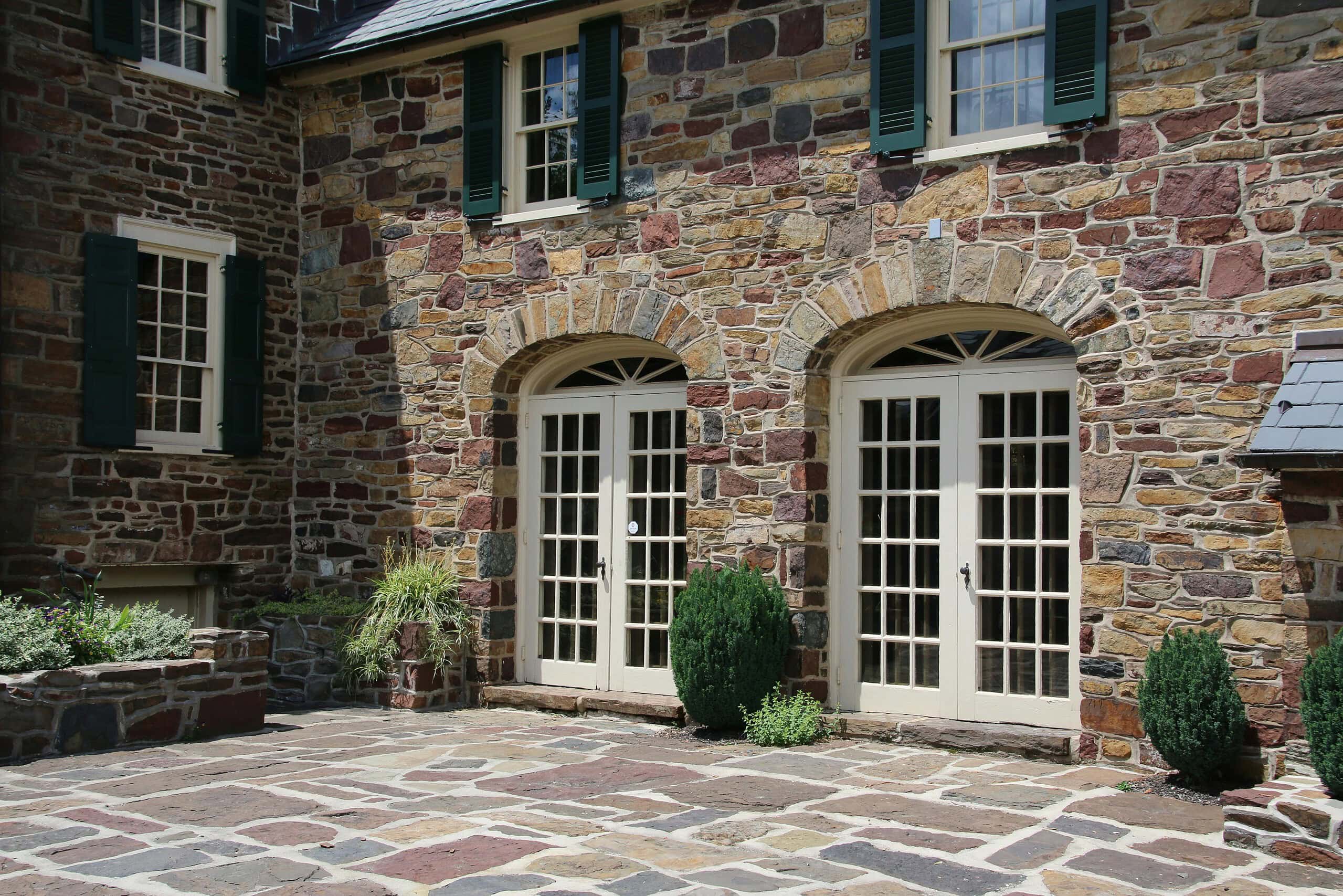
Brick and stone homes are built to last generations. Walk through any established Staten Island neighborhood and you’ll see masonry facades that have stood for 50, 60, even 80 years — solid, beautiful, and seemingly untouchable. That durability is real. But it creates a false sense of security that costs homeowners thousands of dollars every year.
The damage New York winters do to brick and stone homes isn’t dramatic. There’s no single storm that cracks a wall or collapses a chimney overnight. The process is quiet, gradual, and almost entirely invisible until it isn’t. By the time most homeowners notice something is wrong, the problem has been building for several winters — and what started as a $400 repointing job has become a $4,000 structural repair.
Understanding exactly how winter attacks masonry is the first step toward protecting it. Here’s what’s actually happening to your home between November and March, and how to stop it before it compounds.
The Freeze-Thaw Cycle: The Real Enemy of Masonry
Brick and mortar are porous materials. That’s not a flaw — it’s simply how they’re made. They absorb small amounts of water from rain, snow, and humidity as a matter of course. Under normal conditions, that moisture evaporates without consequence.
Winter changes the equation entirely. When absorbed moisture freezes, it expands by roughly 9% in volume. That expansion exerts enormous internal pressure on the brick, mortar, and stone surrounding it. When temperatures rise above freezing — even briefly, even just to 35°F during a midday thaw — the ice melts, the pressure releases, and the material contracts. Then it drops below freezing again overnight, and the whole cycle repeats.
On Staten Island, that cycle doesn’t happen once or twice per winter. It happens dozens of times. The National Weather Service has documented how repeated freeze-thaw cycles cause progressive structural damage to exposed masonry — and in the New York metro area, where temperatures routinely swing above and below freezing within the same day, those cycles accumulate relentlessly from November through March.
Each individual cycle causes microscopic stress. But over a full winter, and compounded across several winters without maintenance, that stress adds up to cracked faces, crumbling mortar, spalling brick surfaces, and eventually structural compromise that no amount of patching can adequately address.
The 7 Ways Winter Damages Brick and Stone Homes
Mortar Joint Deterioration
Mortar is the softest element in any masonry system, and it absorbs freeze-thaw stress before the brick does — which is by design. Mortar is meant to be sacrificial. It can be replaced without touching the surrounding brick.
The problem is that most homeowners don’t replace it until it’s visibly failing. Once mortar joints crack, crumble, or pull away from the brick face, they stop doing the one thing they exist to do: keep water out. Open joints invite moisture directly into the wall assembly, accelerating the exact damage they were meant to prevent.
Repointing — the process of removing deteriorated mortar and replacing it with fresh material — is the single most cost-effective maintenance task available to owners of brick and stone homes. Done proactively, before joints fail completely, it costs a fraction of what structural repair costs once the brick itself begins to deteriorate.
Spalling: When the Brick Face Breaks Away
Spalling is what happens when freeze-thaw cycles damage brick beyond the mortar. The face of the brick — the outer layer — chips, flakes, or breaks away, exposing the softer interior material beneath. Once spalling begins, it accelerates rapidly: the exposed interior absorbs moisture far more readily than the hard outer face, which means each subsequent freeze-thaw cycle does more damage than the last.
Spalled brick is both a structural and aesthetic problem. It cannot be repaired with filler — once the face is gone, the brick needs to be replaced. On historic or older Staten Island homes, matching replacement brick to the original requires attention and expertise, which is why catching mortar deterioration before it reaches the brick face is so important.
Efflorescence: The White Stain That Signals Water Movement
That chalky white residue that appears on brick facades after winter isn’t just cosmetic. Efflorescence is salt that has been dissolved by moisture moving through the masonry and deposited on the surface as the water evaporates. Its presence is a direct indicator that water is traveling through your walls.
On its own, efflorescence doesn’t damage brick. But what it signals — active moisture migration through the wall assembly — absolutely does. Brick and stone homes showing efflorescence after winter need an assessment of where water is entering and how far it’s traveling, not just a pressure wash to remove the staining.
Chimney Damage: The Most Vulnerable Point on Any Masonry Home
Chimneys are the highest, most exposed masonry on most brick and stone homes, which makes them the first place winter damage concentrates. The chimney crown — the concrete cap at the top — cracks under freeze-thaw pressure, allowing water to pour directly into the flue. Mortar joints deteriorate faster at the top of the chimney where wind and moisture exposure is greatest. Flashing at the chimney base can separate, opening a path for water to enter the roof structure.
Many homeowners don’t notice chimney damage until water appears on interior ceilings or walls — at which point the damage has typically been progressing for more than one season. A visual inspection from the ground in early spring, before the damage has time to worsen through spring rain, is the most reliable way to catch chimney deterioration early.
Our chimney repair and construction services cover everything from crown repair and repointing to full chimney rebuilds for Staten Island homeowners dealing with advanced winter damage.
Foundation and Stoop Cracking
The masonry at grade level — stoops, steps, retaining walls, and foundation faces — is subject to additional stress from ground moisture and road salt runoff. Salt lowers the freezing point of water and draws moisture into masonry surfaces through capillary action, then accelerates spalling when freezing occurs.
Horizontal cracks in foundation masonry are particularly serious — they can indicate structural movement rather than surface-level freeze-thaw damage and warrant prompt professional assessment. Vertical cracks in stoops and steps are more commonly cosmetic but still allow water infiltration that compounds over time.
Water Infiltration and Interior Damage
This is where the quiet exterior damage becomes a visible interior problem. Once water has found a path through deteriorating mortar, spalled brick, or a cracked chimney crown, it doesn’t stop at the wall. It travels inward — staining interior finishes, promoting mold growth in wall cavities, and in severe cases reaching structural framing members.
The connection between exterior masonry condition and interior water damage is one that many homeowners don’t make until a contractor opens a wall. By then, what could have been an exterior repair has become a scope that includes drywall, insulation, framing, and mold remediation in addition to the masonry work itself.
Lintel Corrosion and Brick Separation
Above windows and doors in brick and stone homes, steel or iron lintels carry the load of the masonry above the opening. When water infiltrates through deteriorating mortar and reaches these lintels, they begin to rust. Rust expands significantly — far more than even ice — and the expansion pushes the surrounding brick outward, creating the characteristic staircase cracks and bulging brick courses that signal lintel failure.
This is one of the more serious and expensive repairs in masonry construction, often requiring temporary shoring, lintel replacement, and rebuilding of the affected brick courses. It’s also entirely preventable with consistent mortar maintenance that keeps water away from the lintels in the first place.
What to Look for After Every New York Winter
Late March and early April are the best time to assess the condition of brick and stone homes after the season’s freeze-thaw cycles have run their course. Walk the exterior and look for these specific indicators:
Crumbling or recessed mortar joints anywhere on the facade. Brick faces that look chipped, flaky, or have lost their hard outer surface. White efflorescence deposits, particularly concentrated around the base of walls or above windows. Horizontal or staircase cracks in brick courses near windows, doors, or corners. Visible gaps between the chimney and the surrounding flashing. Stoops or steps that have shifted, tilted, or developed new surface cracks since the previous inspection.
None of these signs require immediate emergency action in most cases — but all of them require professional attention before the next winter adds another season of damage on top of existing deterioration.
The Right Repair at the Right Time
Brick and stone homes reward proactive maintenance and punish neglect. A repointing job that costs $800 to $2,000 today can prevent a structural repair that costs $8,000 to $20,000 five years from now. The math is straightforward, but only if the maintenance happens before the damage compounds.
At Albatros Construction, we handle the full range of masonry repair and restoration work for Staten Island homeowners — from targeted repointing and spalling brick replacement to stoop reconstruction, chimney rebuilds, and structural crack repair. Our brick and blockwork services and stonework team work across all masonry types common to the borough’s housing stock.
If your home showed any of the warning signs above after this past winter, or if you simply haven’t had the exterior assessed in several years, contact us for a free estimate. We’ll walk the exterior with you, identify where water is finding paths into the masonry, and put together a repair scope that addresses the problem at its source — not just its surface.
You can also explore our full range of exterior and structural services to see the complete scope of what we handle.
Albatros Construction Inc. is a licensed general contractor serving Staten Island, NY. We specialize in masonry repair and restoration, exterior structural work, chimney construction, and residential renovation.