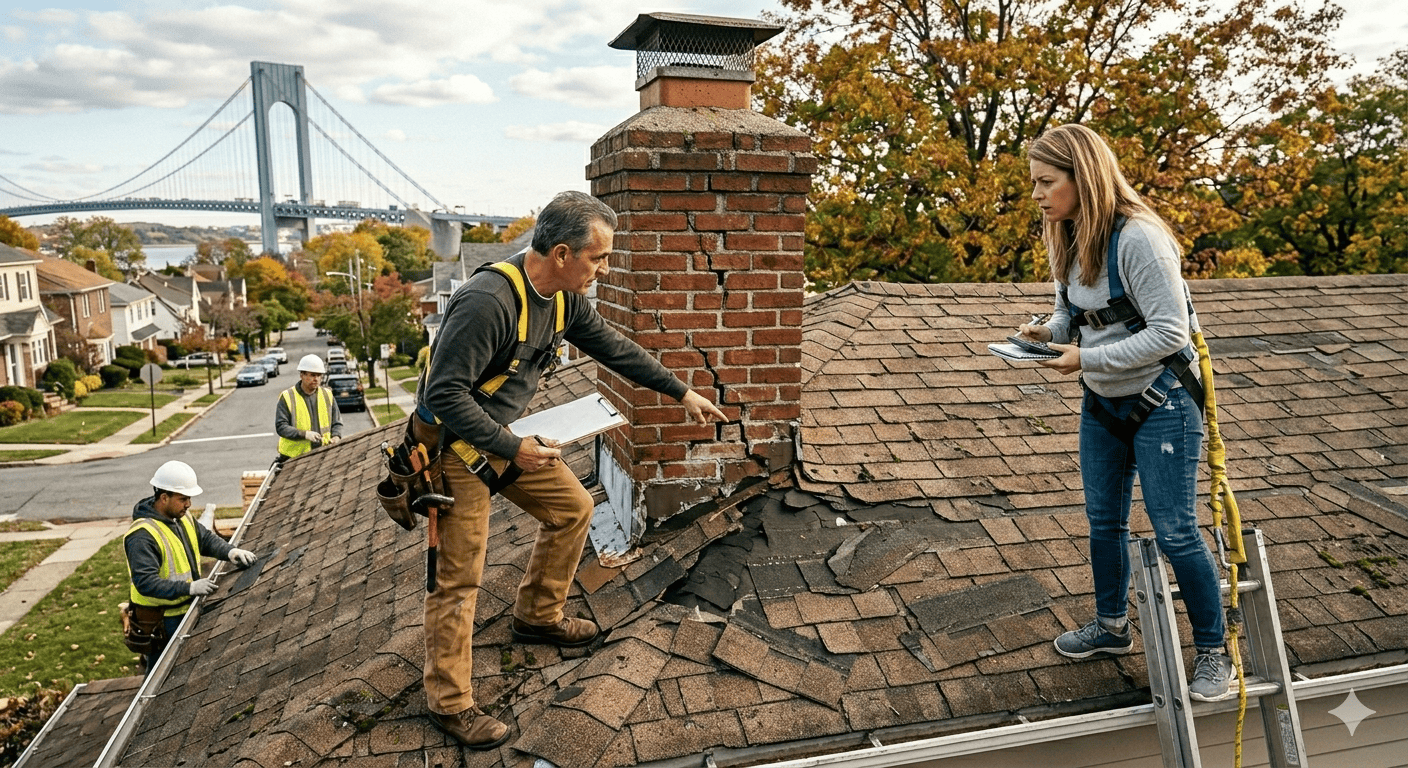
Your roof is doing its job every day — quietly keeping rain, wind, snow, and heat from reaching the inside of your home. Most of the time, you don’t think about it. That’s exactly how it’s supposed to work.
But roofs don’t fail overnight. They degrade gradually, and they give off warning signs along the way. The homeowners who catch those signs early spend a fraction of what those who wait until there’s a leak or a collapse spend. In Staten Island, where nor’easters, heavy summer rain, and coastal weather patterns put real stress on roofing systems, knowing what to look for matters.
Here are five signs of roof failing — and what to do about each one.
1.Shingles That Are Curling, Cracking, or Missing
Your shingles are your roof’s first line of defense. When they’re in good condition, they form a tight, overlapping barrier that sheds water efficiently. When they’re not, that barrier breaks down.
Curling happens when shingles lift at the edges or buckle in the middle. It’s typically caused by age, moisture, or improper installation. Curled shingles can’t lay flat, which means they can’t shed water properly — and they’re vulnerable to being caught by wind and torn away.
Cracking is a sign of age and thermal stress. As shingles repeatedly heat up and cool down over years of seasonal cycling, the material becomes brittle. Cracked shingles no longer provide a reliable water seal.
Missing shingles are the most obvious sign. Even one missing shingle exposes the underlayment — or worse, the decking — to rain, and water will find its way in.
Walk around your home and look at your roofline from ground level, or you can order a roof inspection from professionals in the area. You can also check your gutters — if you’re finding shingle granules accumulating there, your shingles are breaking down even if they look intact from a distance.
What to do: A few damaged shingles can often be replaced individually. Widespread curling or cracking across large sections of the roof typically means the system is near the end of its life and replacement is more economical than piecemeal repair.
2.Water Stains on Interior Ceilings or roof failing
Water stains inside your home are one of the clearest indicators that your roof has a problem — but they’re often the last sign homeowners notice, because by the time water is reaching your ceiling, it has usually been infiltrating the structure for some time.
Water that enters through a compromised roof doesn’t always travel straight down. It can run along rafters or underlayment for several feet before dropping — which is why a stain on your ceiling might not directly correspond to the location of the roof damage.
In Staten Island homes, common entry points include around chimneys, at valleys (where two roof planes meet), around skylights, and at the edges of the roof near the gutters.
What to do: Don’t wait for a stain to get bigger. Once you see water damage on an interior surface, have the roof inspected immediately. The sooner the entry point is identified and sealed, the less structural damage occurs.
3.Sagging Sections of the Roof Deck
A roof should be a flat, even plane — or a consistent slope if it’s pitched. Any sagging, dipping, or soft spots are a serious warning sign.
Sagging typically indicates one of two problems: moisture has damaged the roof decking (the plywood or OSB underneath the shingles), weakening it to the point where it can no longer hold its shape; or there is a structural issue with the rafters or supports beneath.
In either case, this is not a problem to delay addressing. A sagging roof deck is structurally compromised and can deteriorate quickly, especially under the weight of heavy snow or rain.
What to do: This requires immediate professional assessment. A sagging roof is not a repair-it-yourself situation. A contractor needs to inspect the full extent of the damage and determine whether the decking alone needs replacement or whether there are deeper structural issues. On Albatros Construction, we have a free roof inspection.
4.Daylight Coming Through the Attic
One of the most valuable things you can do for your roof’s health is inspect your attic on a bright day. Turn off the lights, let your eyes adjust, and look up at the underside of the roof deck. If you see daylight coming through in any spots, your roof has gaps.
Even small gaps that let in light will let in water. They’ll also let in cold air in winter and hot air in summer, affecting your home’s energy efficiency and comfort.
While you’re in the attic, also look for signs of moisture: dark staining on the rafters or decking, any mold or mildew, or areas where insulation appears wet or compressed.
What to do: Note the locations of any daylight spots and have them addressed by a roof failing professional. In some cases, gaps can be sealed without a full replacement. In others, especially if there is associated moisture damage, more extensive work is needed.
5.Your Roof Is 20 Years Old or More
This one isn’t a visible sign of damage — it’s a fact about lifespan. Most asphalt shingle roofs, which are the most common type on Staten Island homes, have a functional lifespan of 20 to 25 years. Some higher-quality materials last longer; some lower-quality installations last less.
If your roof is approaching or past that age range and hasn’t been replaced, it is in the latter portion of its life regardless of how it looks from the street. The underlying materials — the underlayment, the flashing, the decking — are all aging simultaneously, and failure can come quickly once the system starts to go.
What to do: Have a professional roofing inspection done. A qualified roofer will assess the actual condition of the full system — not just the visible shingles — and give you an honest assessment of remaining useful life and whether repair or replacement makes more sense for your situation.
When to Repair vs. When to Replace
This is the question most homeowners want answered. The general rule:
Repair makes sense when damage is isolated — a specific section of shingles, a compromised flashing seal, a cracked vent boot — and the rest of the roof system is in solid condition with significant life remaining.
Replacement makes sense when damage is widespread, the roof is near or past its expected lifespan, or repair costs are approaching a significant percentage of replacement costs. At some point, repairing an aging roof is throwing money at a system that will need to be replaced within a few years anyway.
An honest roofing contractor in State Sland will give you a clear recommendation and explain the reasoning. Be wary of any contractor who immediately recommends full replacement on a young roof, or who recommends repair on an old, extensively damaged system just to keep the job smaller.
Don’t Wait Until There’s Water in Your Living Room
Roof failing caught early is manageable. Roof damage left to develop becomes expensive, invasive, and in some cases structurally dangerous. The inspection itself costs nothing — and the information it gives you is invaluable for planning and budgeting. A roof inspection most of the time are free or have only a little fee.
Albatros Construction — Roofing in Staten Island
Albatros Construction provides roof failing inspections, repairs, and full replacements for Staten Island homeowners. Our team will give you an honest assessment of your roof’s condition and a clear recommendation for next steps — no pressure, no upselling.
Call us at +1 718-688-1919 or contact us online to schedule your free roof inspection .Add a contingency. Budget 10 to 15 percent above your quoted price for unexpected conditions. This is not pessimism — it’s standard practice for renovation roof failing work.
How to Budget Effectively
The only way to know what your specific renovation will cost is to have a qualified contractor walk through the space, understand your goals, and provide a detailed written estimate based on your actual project — not national averages.