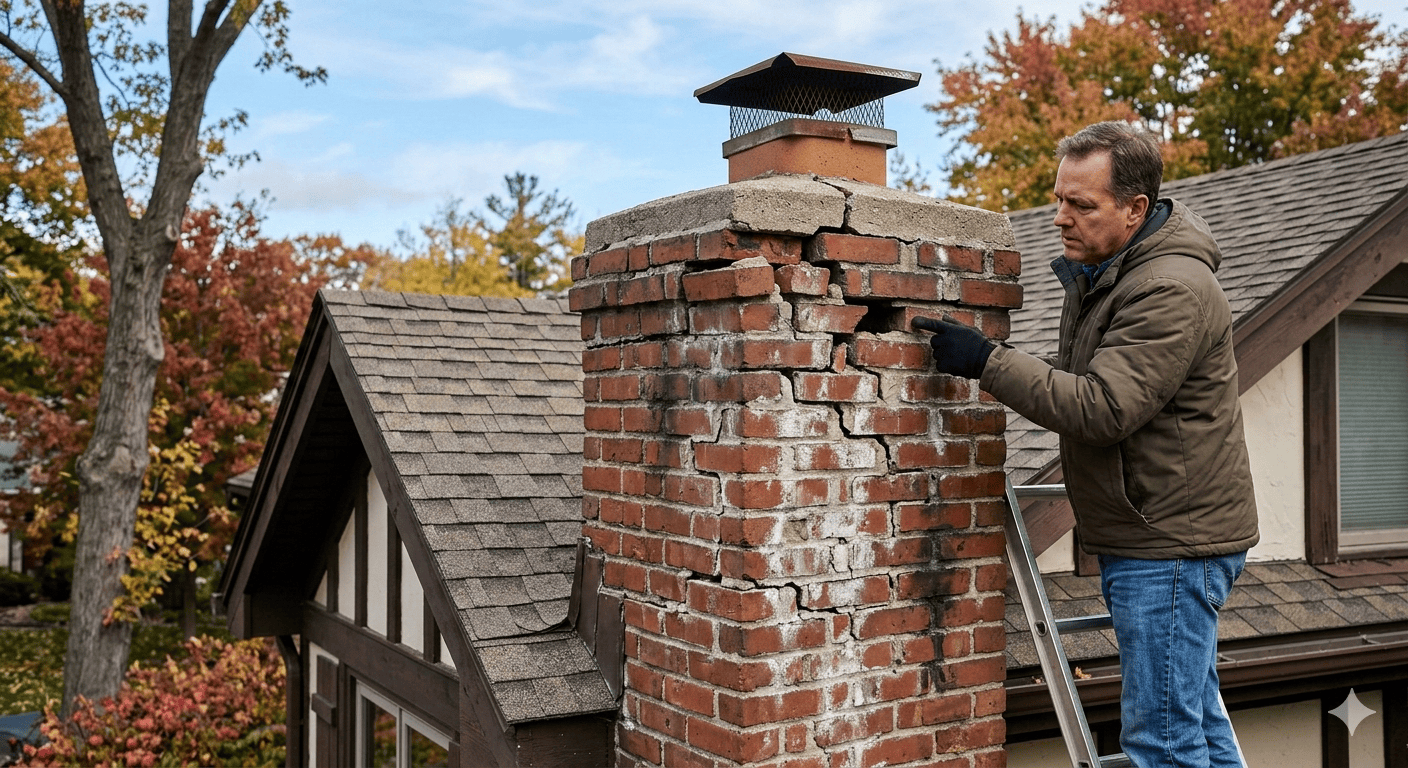
Winter in Staten Island is no joke. Temperatures drop, the wind picks up off the water, and most homeowners are reaching for the thermostat — and lighting the fireplace. But if your chimney hasn’t been inspected or maintained, that cozy fire you’re counting on could turn into a serious problem. Chimney repair doesn’t announce itself loudly. It builds quietly, season after season, until one winter you’re dealing with a leak, a crack, or something far worse. The good news is that the warning signs are there if you know what to look for — and catching them before winter arrives is always cheaper and safer than dealing with the consequences after.
Here’s what every Staten Island homeowner should check before the cold sets in.
White Staining on the Exterior Brick
If you notice white, chalky streaks or patches on the outside of your chimney, that’s called efflorescence. It’s caused by water moving through the masonry and pulling mineral salts to the surface as it evaporates.
On its own, efflorescence isn’t structurally dangerous — but it’s a clear signal that water is getting into your chimney’s masonry. Left unaddressed, that water will continue to work its way in, freeze and expand during cold temperatures, and gradually break down the mortar and brick from the inside out.
If you see white staining, you need a mason to assess the extent of the water intrusion before winter.
Crumbling or Missing Mortar Between the Bricks
Take a close look at the joints between your chimney’s bricks. The mortar — the material that fills those joints — takes constant abuse from weather, temperature swings, and moisture. Over time, it breaks down. When it does, your chimney’s structural integrity is compromised and water has a direct entry point.
This is one of the most common issues we see on Staten Island chimneys, and one of the most important to address before freezing temperatures arrive. Water in a compromised joint will freeze, expand, and push the bricks further apart — a process called spalling — which accelerates damage significantly.
The fix is called tuckpointing: the old mortar is removed and replaced with fresh mortar. Done correctly, it restores the chimney’s waterproofing and structural stability. It’s not a dramatic repair, but it makes a real difference.
Damaged or Missing Chimney Cap
Look at the very top of your chimney. There should be a cap — a cover that sits over the flue opening to keep out rain, snow, birds, and debris.
If your chimney cap is cracked, rusted, or missing entirely, your flue is completely exposed to the elements. Rain and snow will fall directly into the chimney, soaking the liner and interior masonry. Birds and squirrels will find it a convenient nesting spot, creating blockages that are both a fire hazard and a health concern.
A chimney cap is one of the least expensive components to replace and one of the most important. If yours is compromised, replace it before winter.
Cracks in the Chimney Crown
The chimney crown is the concrete or mortar surface that covers the top of the chimney, surrounding the flue. Its job is to redirect water away from the chimney rather than letting it pool around the flue opening.
Cracks in the crown are extremely common — the material expands and contracts with temperature changes, and over time this creates fractures. Small cracks can be sealed. Large or structural cracks usually mean the crown needs to be rebuilt.
You can often see crown cracks from the ground with a pair of binoculars, or during chimney inspections. If you haven’t had your crown looked at in a few years, it’s worth checking.
Rust on the Damper or Firebox
When you open your fireplace, take a look inside. If you see rust on the damper — the metal plate that opens and closes the flue — or on the walls of the firebox, moisture is getting into the system.
A rusty damper may not seal properly, which means cold air will pour into your living room all winter. A rusted firebox can indicate deeper liner or crown issues that are allowing water in from above.
Rust inside the fireplace is never just cosmetic. It’s a sign something needs attention.
Damaged Flashing
Flashing is the metal seal that connects your chimney to the roofline. It’s the critical barrier that prevents water from running down the chimney and into your attic or walls.
When flashing pulls away from the chimney, corrodes, or was poorly installed in the first place, water finds its way in — and the damage often shows up inside the house first: water stains on the ceiling near the chimney, damp walls, or paint peeling in the attic.
If you’ve had any interior water damage near your chimney, flashing is often the culprit. It needs to be inspected and, if necessary, resealed or replaced before the rain and snow season.
It’s Been More Than a Year Since Your Last Inspection
Even if you don’t see any obvious signs of damage, chimneys should be inspected annually — especially if you use your fireplace regularly. Creosote buildup inside the flue is a leading cause of chimney fires, and it’s invisible from the outside. A qualified chimney professional can assess the liner, identify any internal damage, and clean out buildup before it becomes dangerous.
The National Fire Protection Association of Staten Island recommends annual chimney inspections for any chimney, fireplace, or venting system in use. If you can’t remember the last time yours was looked at, that’s your answer.
Don’t Wait Until There’s a Problem
The pattern with chimney damage is consistent: small issues that get missed in fall become expensive emergencies in January. A crack in the crown becomes a leak. A rusted damper becomes a draft problem. A missing cap becomes a bird’s nest blocking the flue.
Addressing these things before winter costs a fraction of what emergency repairs cost mid-season — and it means your fireplace is ready to use safely when you need it most.
Albatros Construction — Chimney Repair in Staten Island
Albatros Construction provides full chimney services for Staten Island homeowners, including inspection, tuckpointing, crown repair, cap replacement, flashing repair, and relining. Our team has the experience to assess what your chimney needs and the craftsmanship to do the work right.
Call us at +1 718-688-1919 or contact us online for a free estimate.